Most color conversations stop at the hair. You talk about tone, lift, root shadow, how many weeks until the next appointment. What rarely comes up is that every color service also happens on living skin — and that skin has its own recovery timeline, separate from the strands growing out of it.
If you color regularly, your scalp is doing more work than an uncolored scalp. Supporting it isn't vanity maintenance. It's the quiet half of keeping color-treated hair looking the way you paid for it to look.
What a color service actually does to your scalp
Permanent color and lightener work in an alkaline environment. That high pH is what swells the hair cuticle so pigment can move in and out — and it's also what makes those products feel warm or tingly at the root. Your scalp's surface naturally sits on the acidic side, and that mild acidity is part of how it stays comfortable and keeps its moisture in.
After a service, that balance takes time to come back. In the days that follow, many people notice a scalp that feels tighter, flakier, or more reactive than usual — itchier in the shower, quicker to feel oily by day two, occasionally a little tender at the part line. None of that is unusual. It's a barrier that's been through something and hasn't fully reset.
Add bleach, frequent root touch-ups every four to six weeks, or hot water and a sun-heavy San Diego lifestyle on top, and the scalp may rarely get a full stretch of undisturbed recovery.
Why scalp condition shows up in how your color looks
This is the part that surprises people. Scalp health and color quality aren't separate concerns — they meet at the root, which is the most visible section of your hair and the part everyone sees first.
- Buildup at the roots — product residue, sunscreen, dry shampoo, sebum — dulls light reflection, so fresh color reads flatter than it did in the salon chair.
- Flaking at the part is especially obvious against darker or vivid shades, and it draws the eye away from the color itself.
- An irritated scalp invites more scratching and more frequent hot, aggressive washing, and frequent harsh washing is one of the fastest ways to pull toner and pigment out.
- Hair emerging from a congested, inflamed environment often grows in with less of the smooth, even surface that makes color look glossy.
In other words: healthy roots make color look expensive. Neglected roots make the same color look like it's already growing out.
What a head spa treatment contributes between color appointments
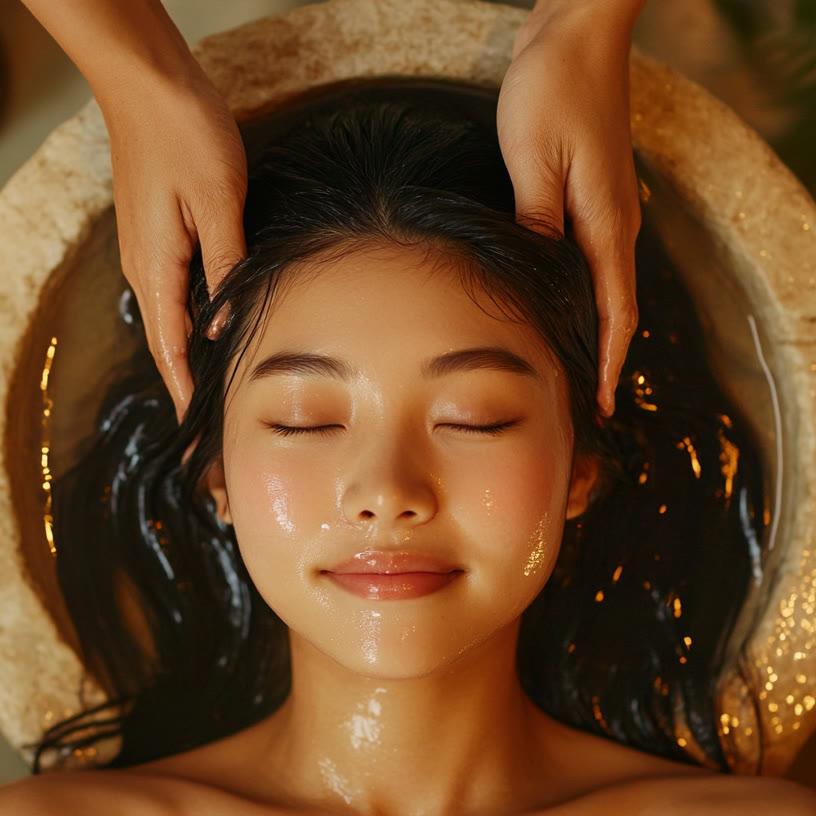
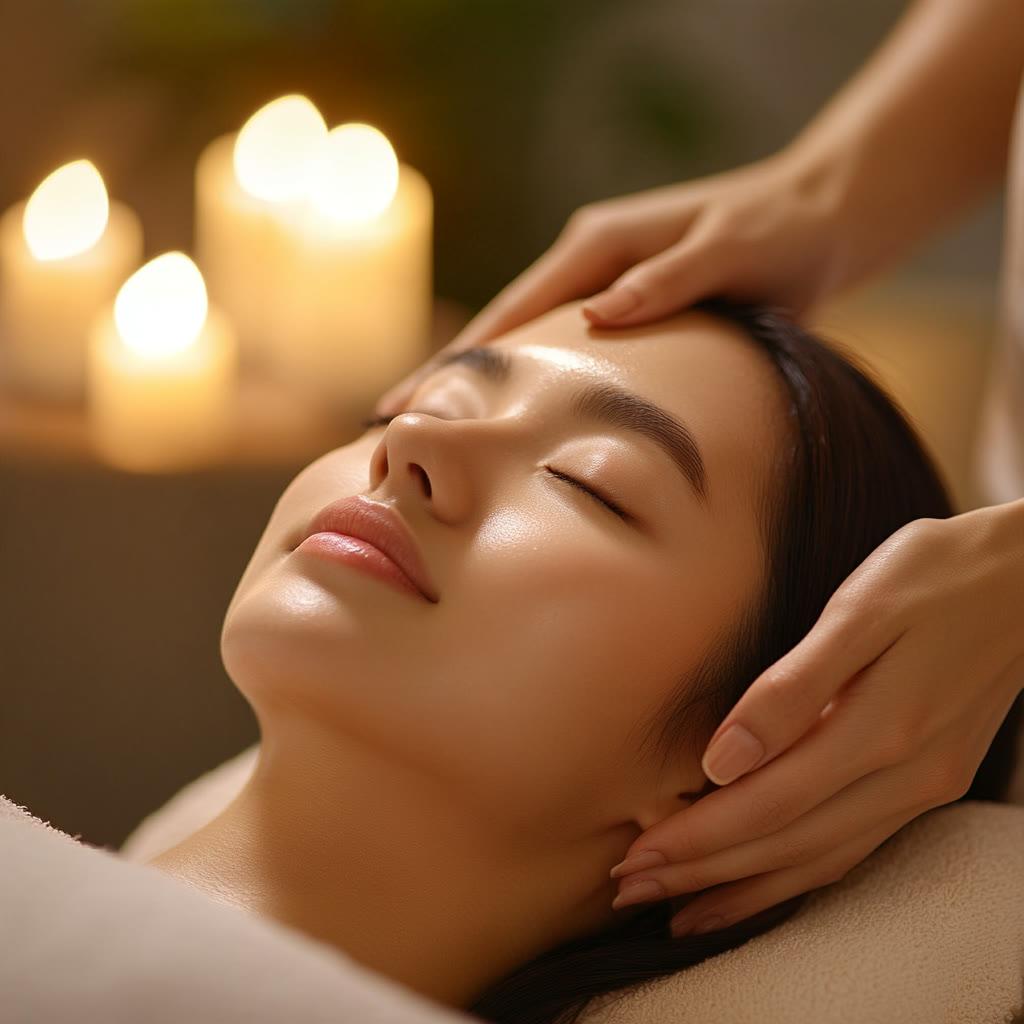
A thorough scalp treatment does a few things at once that are difficult to replicate at home. It clears accumulated residue from the scalp and root area with controlled water temperature and technique rather than scrubbing. It rehydrates skin that's been through an alkaline service. And the extended massage work brings circulation to an area that tends to carry tension, which is why guests often describe leaving with a scalp that feels looser and less itchy.
There's also a practical benefit: a long, warm, low-pressure rinse is gentler on color than the fast hot showers most of us take. Treatments are generally designed around protecting the hair while focusing the work on the skin.
Timing it around your color schedule
The most common question we get from color clients is whether to come before or after. Both work, for different reasons.
- Before a color appointment: aim for a few days to a week ahead. A clean, calm, well-hydrated scalp tends to be more comfortable during the service, and your colorist is working on a clearer canvas.
- After a color appointment: wait until your colorist's recommended window has passed — usually a few days — so your fresh tone has settled. Then a treatment helps your scalp recover from the alkaline exposure.
- Avoid the same day as color, and skip a treatment entirely if your scalp is broken, blistered, or actively reacting. That needs a physician, not a spa.
For most people coloring every four to eight weeks, one scalp treatment per color cycle keeps the skin from falling permanently behind.
Small habits that protect both scalp and color
Lower your shower temperature — hot water opens the cuticle and strips both oil and pigment. Shampoo the scalp, not the lengths, and let the runoff clean the ends. Give your scalp a day or two of rest after color before any exfoliating product. And if you swim or spend long days outdoors, rinse your scalp with fresh water before chlorine and salt have time to dry in place.
Color is an investment in how your hair looks. Scalp care is an investment in the place it comes from. Treated together, they tend to make each other better.
Ready to give your scalp the attention it deserves?
Book a treatment at Umi Head Spa and feel the difference a proper scalp session makes.
Book Now