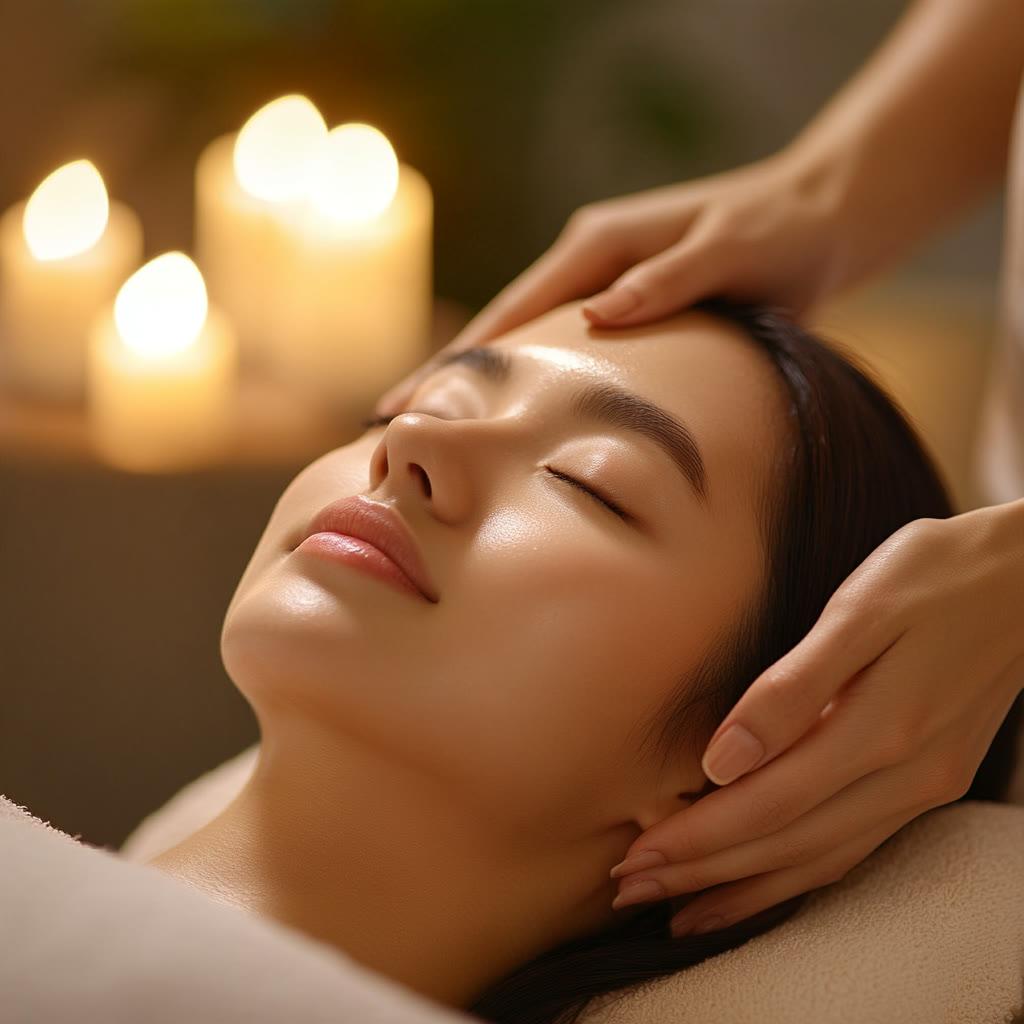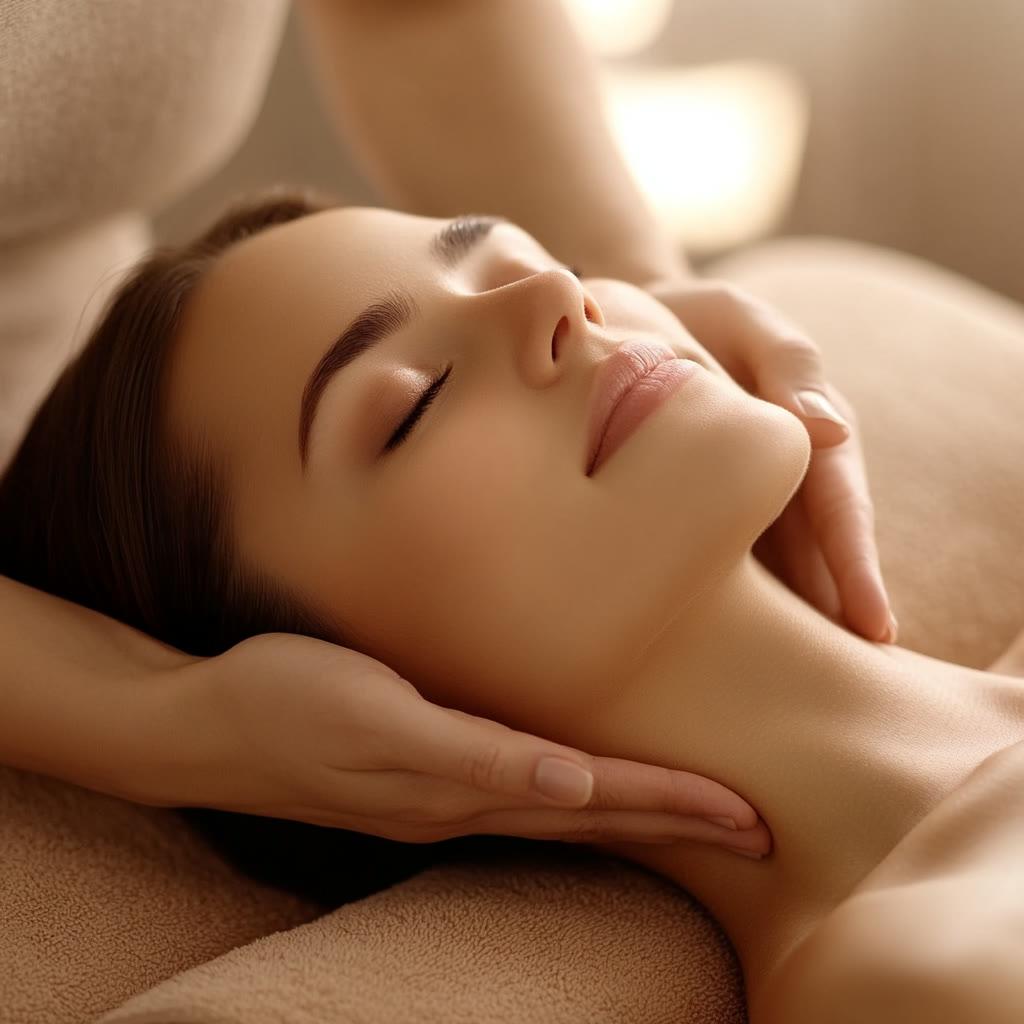
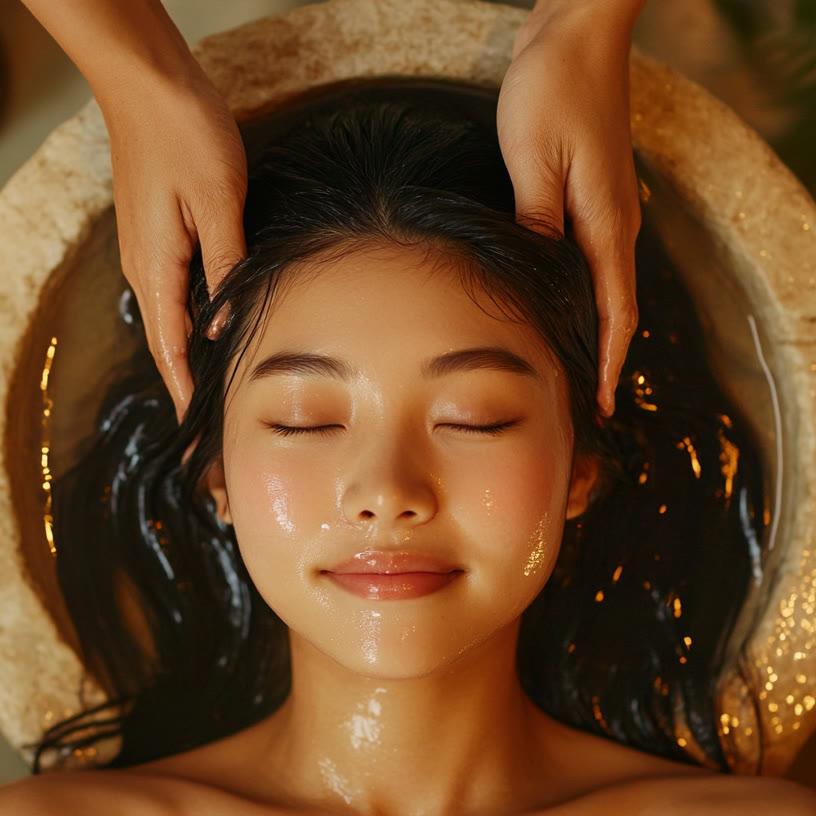
If you have had a head spa treatment and noticed the therapist pausing at the crown of your head, or pressing into the two hollows at the base of your skull, you were experiencing something much older than the modern head spa. Those movements come out of traditional Chinese bodywork, where the scalp has been treated as one of the most responsive areas on the body for a very long time.
You do not need to adopt a particular belief system to benefit from these techniques. But understanding the logic behind them makes the session easier to receive, and it explains why a skilled scalp treatment feels so different from simply having your hair washed.
The Framework: Qi, Blood, and Why the Head Matters
In traditional Chinese medicine, the body is mapped by meridians — channels through which qi, often translated as vital energy, and blood are understood to circulate. Several of these channels either terminate at or pass across the head, which is why the scalp is sometimes described as the meeting place of the yang meridians.
The working theory is that when circulation through an area becomes sluggish or stuck, discomfort and dullness follow. Tension headaches, a tight band across the forehead, heaviness behind the eyes, poor sleep — in this framework, these are read as signs of stagnation in the upper body, and the scalp is where a practitioner goes to address it.
From a modern perspective, there is a simpler overlap: the scalp sits over a dense network of small blood vessels and nerve endings, and the muscles around the skull hold a great deal of tension. Sustained, rhythmic pressure on that area tends to produce a noticeable shift in how people feel. The traditional language and the physiological explanation point at the same territory.
The Points Practitioners Return To
Scalp acupressure uses specific locations rather than general rubbing. A handful of points come up again and again in head and neck work:
- Baihui, at the very top of the head, roughly where a line drawn between the tops of your ears would cross the midline. Often worked for mental heaviness and fogginess.
- Fengchi, the two hollows at the base of the skull where the neck muscles attach. Commonly addressed for neck tightness and tension that radiates upward.
- Taiyang, the temples. Frequently worked when people describe pressure behind the eyes or strain from screen work.
- Sishencong, four points surrounding Baihui at the crown, typically used alongside it.
- Yintang, between the eyebrows. Many guests find this one particularly settling.
In a treatment, these are not jabbed at. Pressure is applied gradually, held, and released, often with the therapist's thumb or fingertip pads, so the tissue has time to soften rather than brace.
Tui Na: The Hand Techniques
Tui na is the manual therapy branch of Chinese medicine, and its name roughly translates to push and grasp. On the scalp it shows up as a sequence of distinct hand movements rather than one continuous motion.
- Grasping, where the fingers gather and lift the scalp tissue in a slow pinch and release along the sides of the head.
- Kneading, small circular pressure that moves the scalp over the skull rather than sliding across the hair.
- Tapping and percussion, light rhythmic contact with fingertips across the whole crown.
- Combing, drawn from the hairline to the nape with the fingers held like teeth, following the direction of the meridians.
The variety matters. Different techniques recruit the tissue in different ways, and the sequence is part of why a well-built treatment keeps feeling interesting instead of going numb halfway through.
Scalp Gua Sha and Combing Tools
Gua sha on the body uses a smooth-edged tool to stroke the skin firmly. On the scalp, it is adapted considerably — the tool is usually a comb-shaped piece of jade, horn, or wood, and it is drawn along the scalp in repeated passes from front to back and from the crown outward.
Unlike facial or body gua sha, scalp work does not aim to produce the characteristic redness. The hair protects the skin and the pressure is lighter. What guests tend to notice is a warming, tingling spread across the head and a loosening of the tightness along the hairline.
How This Shows Up in a Modern Head Spa
A Japanese-style head spa and traditional Chinese scalp therapy are not the same tradition, but they share a great deal of technique, and most contemporary treatments borrow from both. The cleansing, steaming, and water-based elements lean Japanese. The pressure point sequences and the kneading and grasping movements are largely inherited from Chinese bodywork.
In practice at our studio in Mira Mesa, that blend means the massage portion of a session is not improvised. There is a route through the head — hairline, temples, crown, occipital ridge, nape — and the points along the way get specific attention rather than being passed over.
What to Expect, and Who It Suits
Pressure point work on the scalp can feel surprisingly sensitive the first time, particularly at the base of the skull if you carry tension there. It should register as a satisfying ache that eases as the point softens, never as sharp pain. Speak up if it crosses that line; a good therapist will adjust immediately.
Guests who tend to appreciate this style are the ones who describe their tension as living in the head and neck — desk workers, people who clench their jaw, anyone whose stress shows up as a tight scalp. If you are pregnant, taking blood thinners, or recovering from a head or neck injury, mention it when you book so the technique can be modified appropriately.
These methods have lasted because they do something people can feel. The language used to describe them is old, but the experience on the table is immediate and fairly easy to judge for yourself.
Ready to give your scalp the attention it deserves?
Book a treatment at Umi Head Spa and feel the difference a proper scalp session makes.
Book Now