One of the most common things we hear on the table at Umi Head Spa is some version of: "I went through a really hard few months, and now my hair is coming out in the shower." It is a pattern worth understanding, because the timing can be confusing enough to make people think the shedding came out of nowhere.
What cortisol has to do with hair
Cortisol is the hormone your body releases to help you meet demand — a deadline, a move, an illness, a stretch of poor sleep. In short bursts it is useful. When it stays elevated for weeks or months, the body starts making triage decisions, and hair is low on the priority list compared with organs, immune function, and blood sugar regulation.
Each hair follicle moves through a growing phase, a brief transition, and a resting phase before the strand releases and a new one begins. Sustained stress can push a larger-than-usual share of follicles out of the growing phase early and into rest at the same time. Nothing is damaged, but the schedule gets disrupted, and the result is diffuse thinning rather than a distinct bald patch.
Why the shedding shows up late
Here is the part that trips people up: hair pushed into its resting phase does not fall out immediately. It sits for roughly two to three months first. So the shedding you notice in the shower drain in June often traces back to something that happened in March. By the time you see it, the stressful event may be long resolved, which makes the timing feel random.
The reassuring side of that same biology is that the cycle is designed to restart. When the underlying stressor eases, follicles generally re-enter their growing phase, and regrowth tends to appear as short, fine hairs along the hairline and part line. That is often a sign of recovery in progress, not new breakage.
How stress shows up in the scalp itself
Stress does not only act through hormones. It also lives in the muscles and fascia around the skull. Jaw clenching, screen posture, and shallow breathing keep the temples, the base of the skull, and the band of tissue across the top of the head in a low-grade contraction. Guests often describe a scalp that feels tight, tender to the touch, or oddly numb.
That tension tends to travel with other things we see clinically: oil that sits heavy at the roots because the barrier is stressed, flaking that comes and goes, and a scalp that feels reactive to products it used to tolerate. None of this causes thinning on its own, but it makes an already struggling scalp a less comfortable place for hair to grow.
Where scalp care genuinely helps
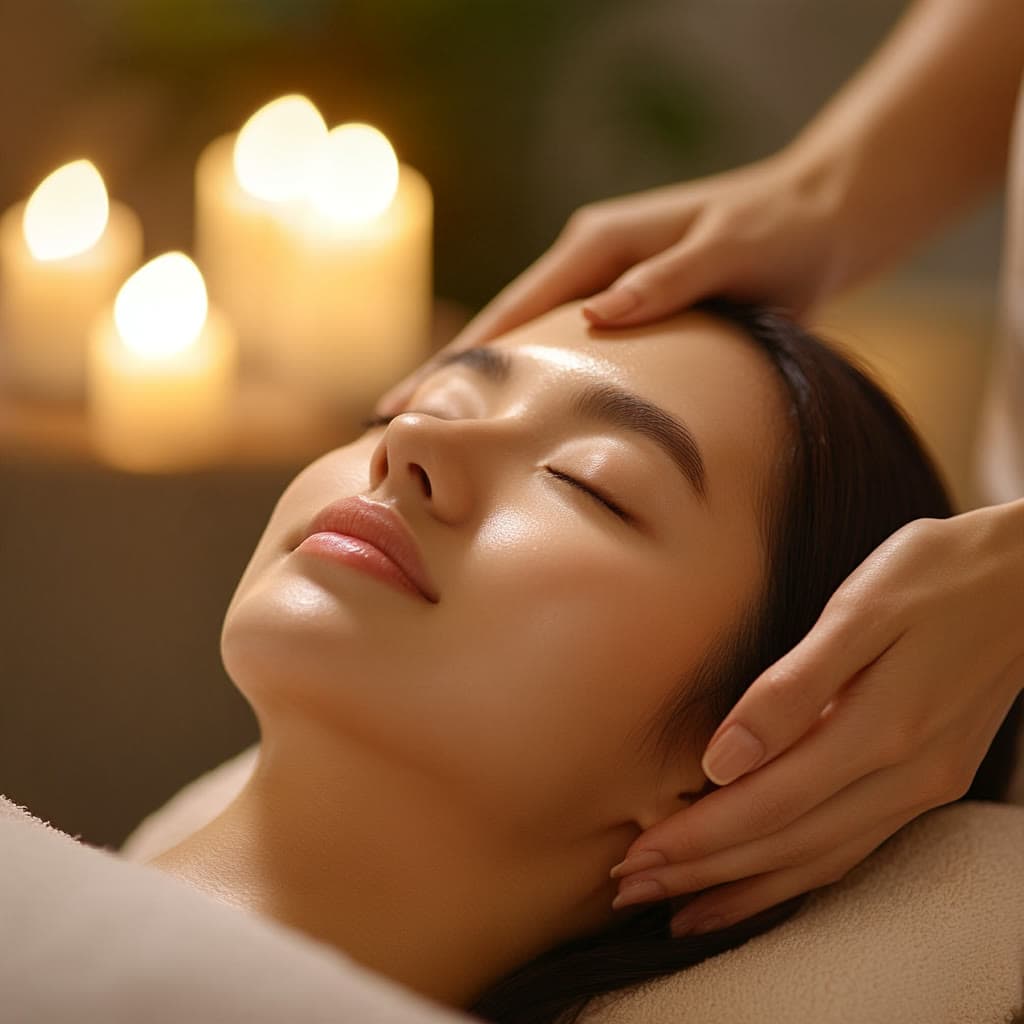
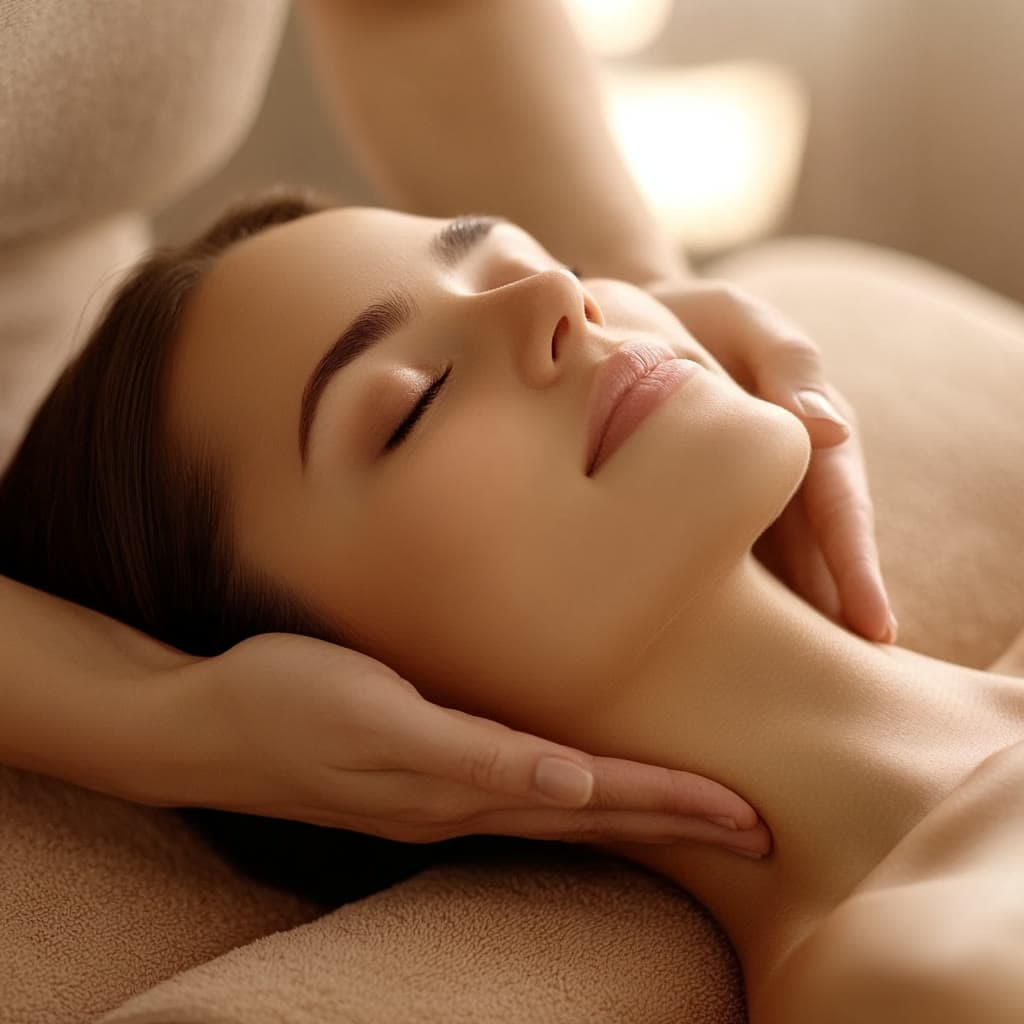
A head spa treatment is not a hormone therapy and it will not undo a stressful year. What it does is address the environment and the nervous system, which is a real and underrated part of the picture. Slow, sustained pressure on the scalp and neck signals the body out of alert mode — most guests fall asleep partway through, which is the point.
Alongside that, clearing built-up sebum, product residue, and dead skin from around the follicle openings gives regrowth an unobstructed start, and keeps flaking and itch from adding friction to hair that is already fragile.
Between visits, a few habits do most of the work:
- Two to three minutes of fingertip scalp massage at night, moving the skin rather than scratching it
- A consistent wash rhythm — letting oil and buildup sit for weeks does the scalp no favors
- Protecting sleep, since most hormonal recovery happens overnight
- Loosening tight ponytails and clips that add mechanical stress to already-thinning areas
- Eating enough protein and iron-rich food, which the hair cycle depends on
When to bring in a doctor
Scalp care sits alongside medical care, not in place of it. If shedding continues past six months, if you see distinct round patches, visible scalp at the crown, or if it comes with fatigue, changes in your cycle, or unexplained weight changes, see a dermatologist or your physician. Thyroid function, iron levels, postpartum changes, and genetic pattern hair loss all look similar from the outside and need testing to sort out.
For stress-driven thinning specifically, the most useful thing you can offer your scalp is consistency and calm — a clean, well-circulated, unclenched foundation while the cycle finds its rhythm again. That is the work we do at our Mira Mesa studio, and it is slower and quieter than most people expect.
Ready to give your scalp the attention it deserves?
Book a treatment at Umi Head Spa and feel the difference a proper scalp session makes.
Book Now