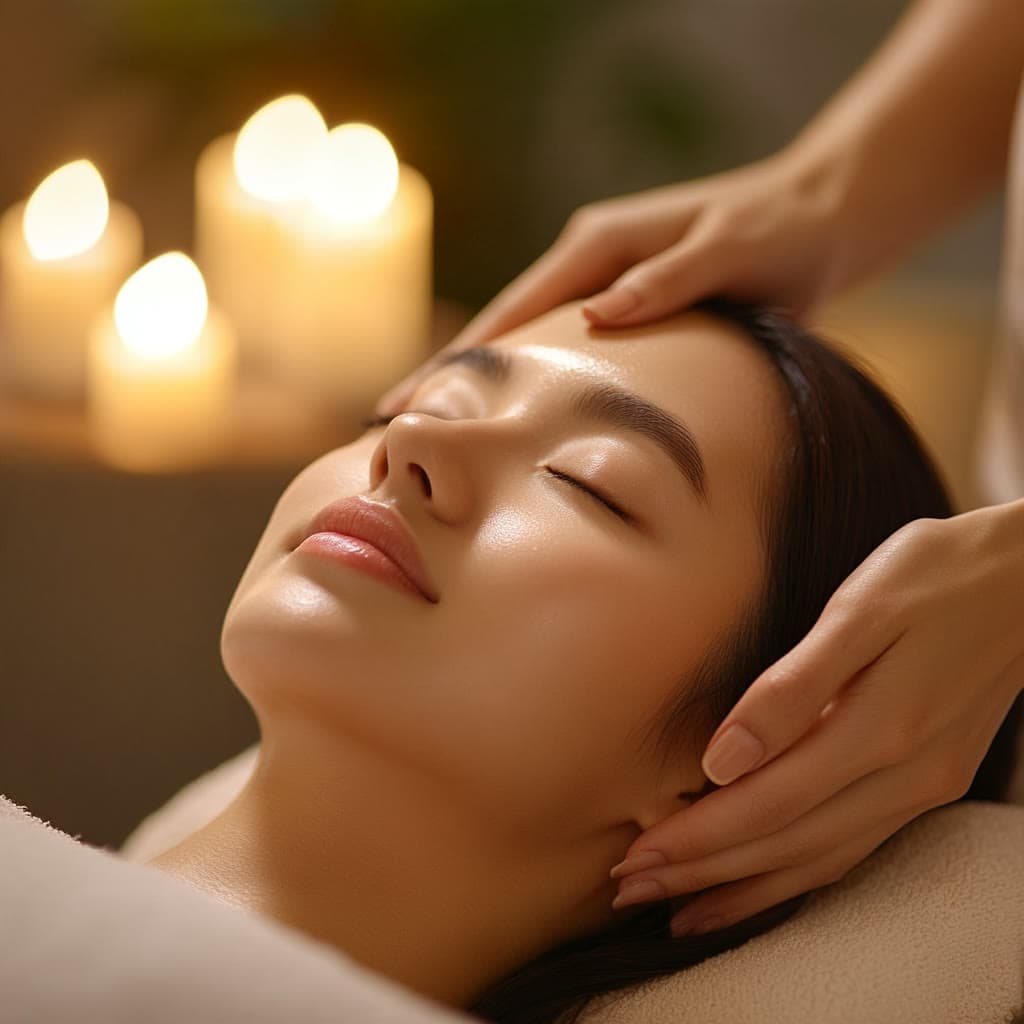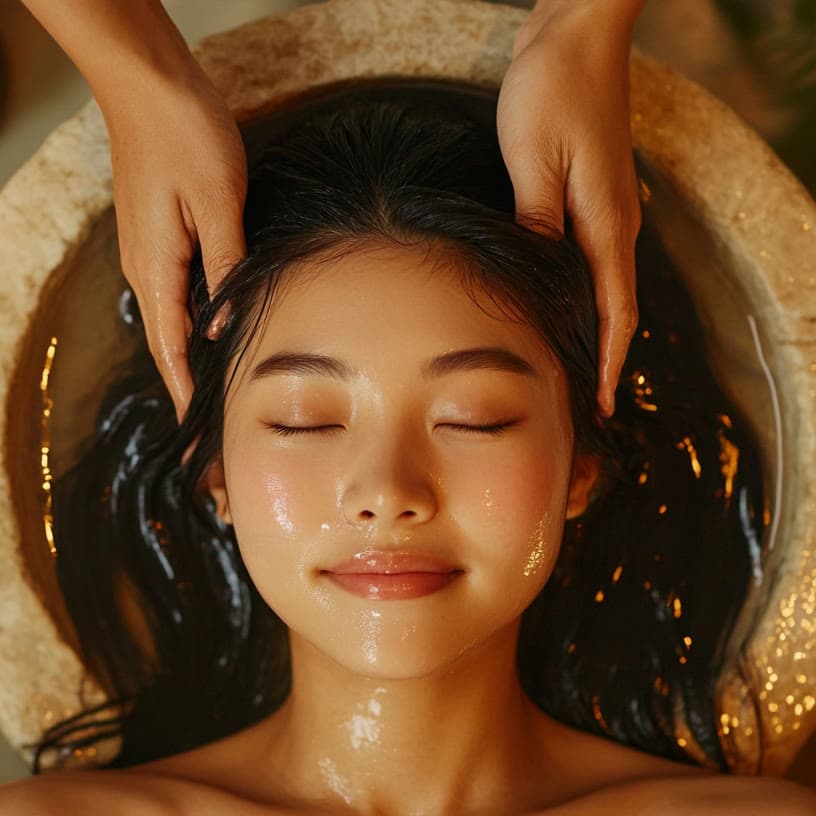

Most people think of exfoliation as a face thing — a scrub, a glycolic toner, a once-a-week ritual. The scalp gets left out of that conversation, even though it's the same organ, with the same turnover cycle, doing the same shedding. The difference is that your scalp is covered in hair, sits under more oil glands than almost anywhere else on the body, and regularly receives products designed to stay put.
That combination is why buildup accumulates there quietly. You don't see it the way you'd see flaking on your cheek. You feel it instead: hair that goes limp a day after washing, a scalp that itches without an obvious cause, roots that never quite feel clean.
What Actually Builds Up on Your Scalp
Scalp buildup isn't one substance. It's a layered mix that forms gradually, and each component behaves a little differently when you try to wash it away.
- Sebum — the oil your scalp produces naturally. It protects the skin barrier and conditions the hair shaft, but it oxidizes over time and becomes thicker and tackier.
- Dead skin cells — your scalp sheds its outer layer on roughly the same cycle as facial skin. Hair traps those cells instead of letting them fall away.
- Product residue — silicones, polymers, and styling film-formers are engineered to resist water. Shampoo removes some of it, but not always all of it.
- Sweat and mineral deposits — especially relevant in San Diego, where harder water leaves a faint mineral film that dulls hair over time.
- Environmental particulates — dust, pollen, and sunscreen that migrates up from the hairline.
Alone, none of these is a problem. Mixed together and left in place, they form a compacted layer that regular shampooing can skim but not fully lift, particularly near the part line and the crown where you tend to scrub least.
Why Buildup Matters at the Follicle
Each hair emerges through a follicular opening, and sebaceous glands empty into that same channel. When oil and dead cells accumulate at the opening, the local environment changes. It becomes a warmer, oilier pocket — conditions that Malassezia, the yeast naturally present on most scalps, tends to favor. For some people, that shift shows up as itch, redness, or the fine flaking associated with seborrheic dermatitis.
There's also a simple mechanical issue. A new hair pushing through a congested opening meets more resistance. This is not the same as saying buildup causes hair loss — it doesn't, and anyone promising that exfoliation will regrow hair is overselling. What a clear follicular opening does offer is a less inflamed, less irritated environment for the hair that's already growing, and better absorption of anything you apply afterward. Serums and treatments can only work on skin they can actually reach.
Physical Versus Chemical Exfoliation
Both approaches work, and they solve slightly different problems.
- Physical exfoliation uses fine granules or soft silicone tips to loosen debris mechanically. It's immediately satisfying and good for dislodging compacted product, but aggressive scrubbing on an already-irritated scalp can make redness worse.
- Chemical exfoliation uses acids — salicylic acid is oil-soluble and travels into the follicle, while lactic and glycolic acids work more on the surface layer. These dissolve the bonds holding dead cells together rather than scraping them off, which is gentler on a sensitized scalp.
If your scalp is oily and product-heavy, salicylic acid tends to be the more useful tool. If it's dry and flaky, a milder lactic acid paired with thorough rinsing and a hydrating follow-up usually feels better than any scrub.
How Often Is Enough
Over-exfoliation is a real thing, and it's more common than under-exfoliation among people who've just discovered scalp care. Stripping the skin barrier too often triggers a rebound: the scalp produces more oil to compensate, and you end up chasing the greasiness you were trying to fix.
For most people, once every week or two is enough at home. Oily scalps and frequent stylers may want the shorter end of that range; dry, color-treated, or easily irritated scalps do better at the longer end. The signal to back off is tightness, stinging, or new flaking in the days after — that's barrier disruption, not detox.
What This Looks Like in a Head Spa Treatment
In a studio setting, exfoliation happens with the benefit of magnification and steam. We can see where buildup is actually concentrated — it's rarely even across the whole head — and treat those zones specifically rather than scrubbing uniformly. Warm water and steam soften sebum before anything abrasive touches the skin, which means less pressure is needed to lift it.
The part that's hard to replicate at home is the rinse. Thorough removal of loosened debris takes several minutes of directed water flow through the hair at the root, and most people simply don't rinse that long in the shower. Residual exfoliant left behind becomes its own form of buildup.
Guests often describe the result as their scalp feeling lighter and their hair holding volume longer between washes. That's not magic — it's just what skin does when you clear the surface and let it breathe. If you're starting a scalp care routine, exfoliation is a reasonable place to begin, as long as you treat it as maintenance rather than a cure.
Ready to give your scalp the attention it deserves?
Book a treatment at Umi Head Spa and feel the difference a proper scalp session makes.
Book Now