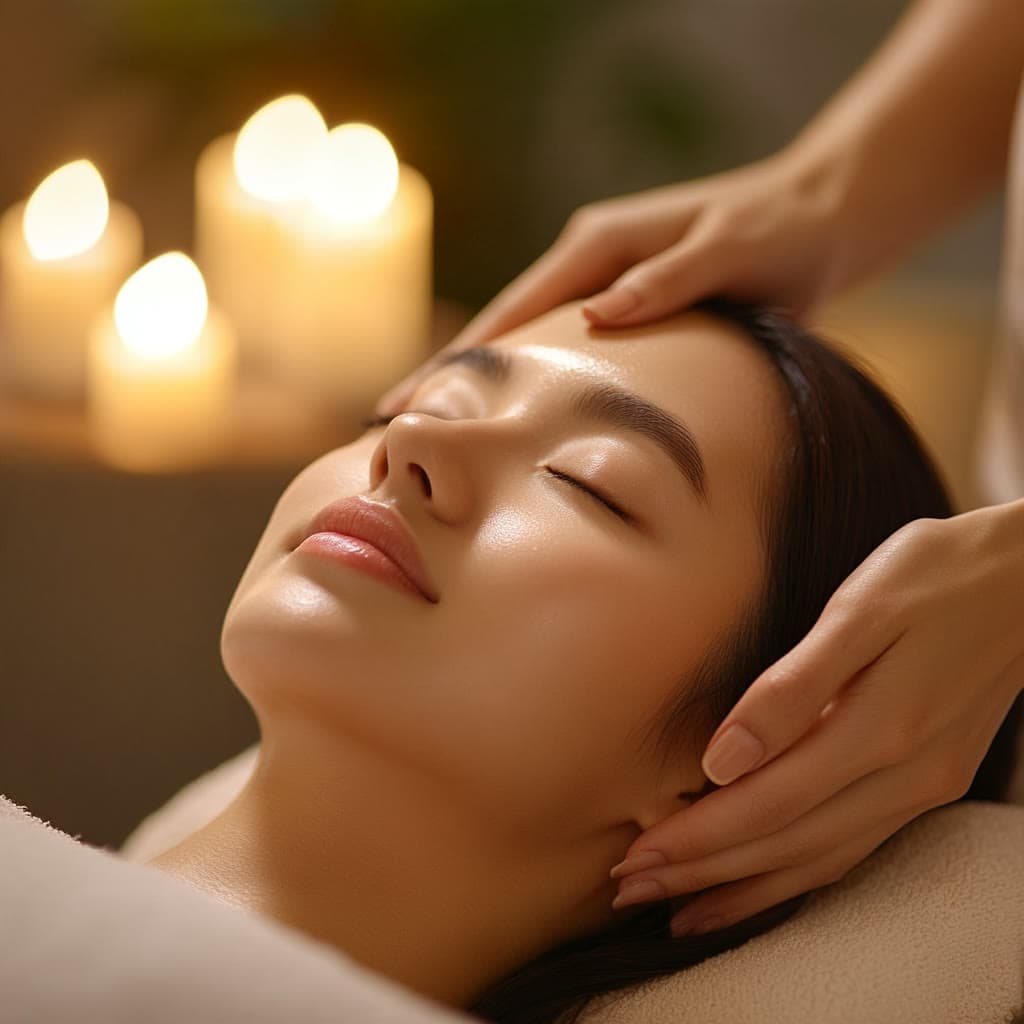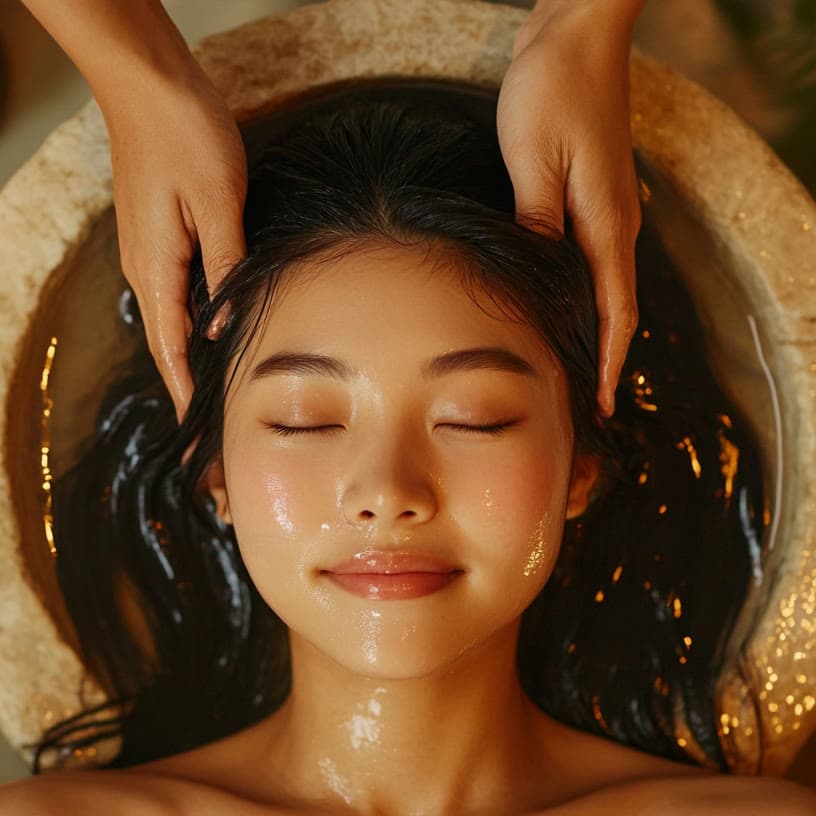

Most of the men who come into the studio arrive the same way: a partner booked it, or they read something about thinning and decided to try one thing before committing to anything bigger. By the end, the question is usually some version of "why did nobody tell me about this sooner?"
Head spa treatments have a reputation as a feminine spa service, mostly because of how they're marketed. The treatment itself has nothing to do with gender. It's cleansing, circulation, and skin care applied to the one patch of skin almost everyone ignores.
Men's scalps are often working harder
A few things make the male scalp a higher-maintenance environment, not a lower one.
- Sebum output tends to run higher, which means oil and dead skin mix into buildup faster between washes.
- Shorter hair leaves the scalp directly exposed to sun, wind, and sweat — in San Diego, that's year-round UV on skin that rarely gets sunscreen.
- Pomade, clay, paste, and dry shampoo are formulated to grip. They don't fully rinse out with a quick lather, and they accumulate at the roots.
- Hats, helmets, and beanies trap heat and moisture against the scalp for hours at a time.
- Gym sessions and surf days add salt, chlorine, and sweat that sit on the scalp until the next wash.
Layer those together and you get a scalp that's simultaneously congested at the root and dried out at the surface. That combination is behind a lot of the flaking, itching, and dull, limp hair men assume is just how their head is.
The thinning conversation
Male pattern hair loss is genetic and hormonal, and no scalp treatment reverses it. Anyone telling you otherwise is selling something. What's worth understanding is that genetics usually isn't the only thing happening up there.
Buildup, inflammation, and chronic tightness in the scalp don't cause pattern loss, but they make an already-struggling follicle environment less hospitable. Guests often notice that once the scalp is genuinely clean and the tissue is less tight, their existing hair looks fuller and behaves better — more volume at the root, less of that flat, greasy-by-noon look. That's a real and visible difference, and it's honest to describe it as improving the condition of what you have rather than growing what you've lost.
If you're using minoxidil or a prescribed topical, a cleaner scalp also tends to make those routines more comfortable. Products applied to a surface loaded with old residue aren't doing their best work.
What actually happens during the treatment
If the word "spa" is the sticking point, it helps to know the format. You lie back fully clothed with your head in a basin. The treatment is hands-on scalp work, not a facial or a cosmetic service.
- A scalp assessment, often with a magnified camera so you can see your own follicles, pores, and any buildup or redness.
- A deep cleanse that breaks down oil and product residue at the root, which a standard shampoo mostly skims.
- Extended massage through the scalp, neck, and shoulders — this is where most of the tension release happens.
- A warm rinse, often with light steam, and a treatment suited to whether your scalp runs oily, dry, or sensitive.
- A finish and dry, so you leave looking put together rather than damp.
Expect roughly 45 to 90 minutes depending on the service. Most men fall asleep somewhere in the middle, which tells you more about the experience than any description will.
Fitting it into a routine you'll actually keep
The easiest approach is to attach it to something you already do. If you see a barber every three to four weeks, book a head spa on alternating visits, or once every six to eight weeks. That cadence stays ahead of buildup without becoming another standing obligation.
Between visits, the highest-return habits are unglamorous: wash the scalp rather than just the hair, use your fingertips instead of your nails, rinse longer than feels necessary, and rinse after ocean or pool days even if you're not doing a full wash. If you wear a hat most days, give your scalp some uncovered air time.
A reasonable first step
You don't need an existing problem to justify a head spa, and you don't need a grooming routine beyond soap and a comb. If your scalp itches, flakes, feels tight, or gets oily faster than seems normal — or if you've simply never looked at it closely — one session with a scalp assessment will tell you more than months of guessing. From there you can decide whether it's worth repeating.
Ready to give your scalp the attention it deserves?
Book a treatment at Umi Head Spa and feel the difference a proper scalp session makes.
Book Now